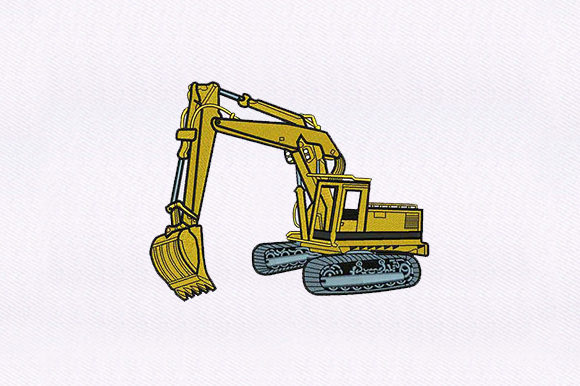
Excavator: A Bold, Playful Machine Embroidery Design
First Impression: Rugged Charm Meets Craft Fair Appeal
As an embroidery designer who’s curated over 200 craft fair booths—and stitched thousands of handmade products—my first thought when I see Excavator is: “This isn’t just another transportation-themed design. It’s personality with purpose.” The name alone signals strength and movement, but the description—“highly detailed embroidery” and “will look great on any fabric”—tells me this is built for versatility, not just novelty. It reads bold, slightly playful, and grounded—not cartoonish or overly technical. Think rustic-modern: sturdy enough for a workshop apron, charming enough for a toddler’s backpack patch, and distinctive enough to stand out in a sea of florals and quotes at a weekend market.
Where Excavator Shines on Handmade Products
In my booth setup—tote bags front-and-center, aprons draped over a ladder shelf, tea towels folded beside embroidered patches—I test every design for *real-world visibility*. Excavator delivers across categories:
- Tote bag design: Works powerfully as a large-scale focal piece on natural canvas or heavy cotton. Its structural lines read clearly from three feet away—critical when shoppers are scanning your table mid-crowd.
- Apron embroidery: Perfect for chest placement—clean, confident, and gender-neutral. Customers consistently pause longer at aprons with strong graphic motifs like Excavator, especially when paired with contrast thread (think navy apron + bright yellow excavator bucket).
- Tea towel embroidery: Holds up beautifully on textured linen or terry cloth—if stitch density is balanced. Avoid placing it near hems where folding might distort fine details.
- Embroidered patch: Ideal for iron-on or sew-on versions. Its defined silhouette makes it instantly recognizable even at 3 inches tall—great for kids’ gear, denim jackets, or small shop product tags.
- Caps & pouches: Use only the central profile (not full side view) for curved surfaces. On caps, keep it under 4 inches wide; on fabric pouches, center it above the zipper for instant impact.
- Pillow covers & market bags: Scales elegantly. At 6–8 inches wide, Excavator reads as both decorative and intentional—adding handmade quality without feeling fussy.
What Makes Excavator Sell—And What Requires Caution
This isn’t just about aesthetics—it’s about conversion. At craft fairs, Excavator draws attention because it tells a quiet story: capability, curiosity, hands-on work. That resonates with makers, parents of little builders, teachers, landscapers, and fans of industrial-chic style. But real-world production demands honesty:
- Clarity at scale matters: Tiny cab windows or articulated joint lines may blur below 3.5 inches. For patches under 2.5”, simplify or choose a streamlined version.
- Dense stitch areas need smart stabilizing: If the bucket or engine compartment has tight fill stitching, use cutaway stabilizer on knits or stretchy fabrics—and always test on scrap first.
- Fabric texture is non-negotiable: On heavily textured tea towels or burlap, reduce stitch density if possible (check your embroidery file settings) or opt for satin-stitch outlines instead of dense fills.
- Dark fabric? Prioritize thread contrast: Metallic gold or safety-orange thread pops against charcoal or forest green—avoid beige or light gray thread unless you’re aiming for subtlety (which rarely wins at craft fairs).
- Hoop size & placement: Confirm the largest version fits your standard hoop before batching. Nothing kills momentum like re-hooping mid-show.
Photography, Listings, and Digital Presence
For Etsy sellers and digital embroidery file shops, Excavator photographs exceptionally well—especially on neutral backgrounds with natural light. Its clean lines translate crisply in printable mockups, making it easy to showcase across tote bags, caps, and pillow covers without visual clutter. As a small shop product, it strengthens brand consistency when paired with complementary designs (e.g., a matching dump truck or bulldozer)—but avoid overcrowding your catalog. One standout Transportation-themed machine embroidery design like Excavator often outsells three generic ones.
Designer-to-Designer Notes You Can’t Skip
Before cutting your first production run, do these six things:
- Test on scrap fabric—same type, same color, same stabilizer you’ll use for finished products.
- Check thread contrast by stitching two versions: one with high-visibility thread, one with tonal. See which reads better in person.
- Review spacing between elements—tight joints or overlapping parts can cause thread nesting or skipped stitches.
- Confirm hoop size compatibility across your embroidery machines. Don’t assume “large” means universal.
- Inspect stitch density—especially in mechanical details. Overly dense fills crack on flexible fabrics; too sparse looks unfinished.
- Create at least one real mockup—stitched, pressed, and styled on the actual product (e.g., an embroidered tea towel hung on a vintage hook). Does it feel premium? Does it photograph true to your listing?
And crucially: verify commercial licensing. Since Excavator is positioned as a machine embroidery design for handmade products, ensure your purchase includes rights for resale of finished goods—not just personal use. When in doubt, contact the designer or marketplace before committing to 50 tote bags.
Final Thought: Excavator Is Booth Gold
In a market saturated with delicate florals and inspirational quotes, Excavator brings grounded energy and unexpected warmth. It doesn’t shout—but it holds space. It works for dads, daycare teachers, boutique owners, and Etsy sellers building cohesive collections. It elevates a simple tote into a conversation starter and turns a $12 tea towel into a giftable handmade product with narrative weight. As a Transportation-themed Embroidery design, it’s more than thematic—it’s tactile, memorable, and quietly confident. Just remember: its strength lies in smart execution, not just bold lines. Stitch it right, show it proudly, and watch it dig deep into your sales.