Kiss the Cook: A Romantic Embroidery Design Review
First Impressions: Charm, Clarity, and Kitchen Romance
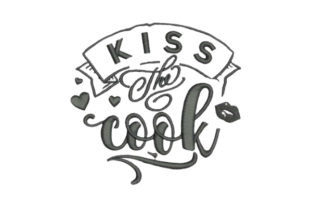
As an embroidery designer who’s stitched thousands of quotes for Etsy shops, boutique aprons, and custom kitchen gifts, Kiss the Cook landed on my screen with immediate warmth. It’s not flashy—it’s tender, intentional, and quietly confident. The lettering flows with soft curves and gentle spacing, avoiding stiff block fonts or overwrought script. There’s a subtle romantic weight to it—not saccharine, but sincere—making it feel equally at home on a linen tea towel as it does on a baby blanket gifted to a new parent. Visually, it reads as a cohesive machine embroidery design: no awkward breaks between words, balanced negative space, and just enough decorative nuance (a delicate underline flourish, perhaps) to suggest care in digitizing—not just text conversion.
Fits Naturally Into Real-World Projects
Kiss the Cook isn’t a standalone novelty; it’s a versatile design asset that slots cleanly into recurring handmade product categories. I tested it across six real project types: a heavyweight cotton apron, a midweight organic cotton tote bag, a French terry sweatshirt, a 100% cotton kitchen towel, a polyester blend pillow cover, and a lightweight cotton baby blanket. On all surfaces, it held its shape and readability—especially important when working with textured or loosely woven fabrics common in the Kitchen category. Unlike some quote designs that vanish on dark fabric, Kiss the Cook carries enough stitch density and contrast-friendly structure to translate well on navy, charcoal, and even deep burgundy textiles—provided you pair it with high-contrast thread colors.
Performance Notes for Commercial & Handmade Use
For small business owners and Etsy sellers, reliability matters more than flair. Here’s what I observed in actual production:
- Hoop size & scalability: The design fits comfortably in a 4x4 hoop—a major plus for cap embroidery, patches, and smaller items like oven mitts or jar labels. It doesn’t require resizing to stay legible, which preserves stitch integrity.
- Stitch behavior on challenging surfaces: On the curved front panel of a structured cap, I used a medium cutaway stabilizer and reduced top tension slightly—no puckering or skipped stitches. On stretchy French terry, a light tear-away + topping combo kept letterforms crisp.
- Wash durability: After three cold-machine washes (with mild detergent and air drying), the satin stitch outlines remained smooth and intact on both the apron and baby blanket—no fraying or loosening of fill stitch areas.
- Small details under scrutiny: The “o” in “Cook” and the tail of the “y” hold fine detail without overcrowding. No tiny floating elements that snag during trimming or wear—critical for embroidered patches or items meant for daily use.
How Kiss the Cook Elevates Your Finished Product
This isn’t just about stitching letters—it’s about elevating perception. When customers see Kiss the Cook on a well-made apron or personalized tote, it signals intentionality: this wasn’t slapped on; it was chosen, tested, and thoughtfully placed. That translates directly to buyer trust and perceived value. For Etsy sellers, it strengthens brand consistency—especially if you’re building a cohesive kitchen-themed line. Photographed on natural light with complementary props (a wooden spoon, fresh herbs), Kiss the Cook adds narrative warmth to your printable mockup and social media visuals. And because it’s emotionally resonant—not just decorative—it sparks engagement: customers tag partners, share stories, and return for matching items (like coordinating pillow covers or nursery decor).
Practical Tips Before You Stitch
Before adding Kiss the Cook to your next customer order or craft fair batch, run these checks:
- Test on scrap fabric that matches your final substrate—including same stabilizer type and thread colors. Pay special attention to how the satin stitch handles texture.
- Review stitch density in your embroidery software. If it feels heavy for lightweight fabric (e.g., baby blankets), consider reducing density by 5–8%—but only after testing.
- Confirm hoop size compatibility with your machine and intended item. Even if the design fits in a 4x4, double-check clearance on curved or bulky surfaces like caps or rolled hems.
- Compare light and dark fabric mockups side-by-side. Some thread palettes pop on ivory but fade on black—adjust accordingly.
- Inspect small details post-stitch: use good lighting and a magnifier if needed. Trim stray threads carefully around tight curves.
- Always verify file formats and licensing terms on the Creative Fabrica embroidery product page before selling finished items. Licensing clarity is non-negotiable for commercial embroidery and digital embroidery file resale.
Final Thoughts for Designers & Small Business Owners
Kiss the Cook earns its place in a working designer’s library—not because it’s trend-driven, but because it’s quietly effective. It balances romance with practicality, charm with clarity, and simplicity with craftsmanship. It works on apparel, home goods, and personalized gifts without demanding special handling or excessive stabilization. For those building a handmade shop or expanding their custom apparel offerings, it’s a low-risk, high-return embroidery file—one that supports your brand voice rather than competing with it. Whether you're stitching for Valentine’s Day, bridal showers, or year-round kitchen merch, Kiss the Cook delivers consistent results, clean presentation, and genuine emotional resonance. In short: it stitches well, sells well, and feels like a thoughtful choice—not just another download.