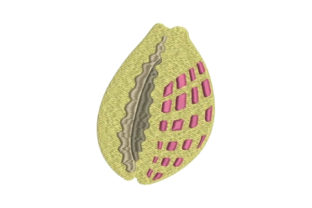
Seashell: A Nautical Embroidery Design Review for Small Business Merch
First Impression: Friendly, Handmade, and Professionally Nautical
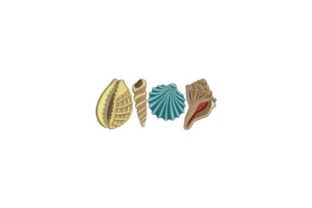
Right out of the gate, Seashell delivers a warm, approachable nautical vibe—no harsh anchors or aggressive marine motifs here. It’s not overly literal or cartoonish; instead, it leans into elegant satin stitch detail that suggests craftsmanship without sacrificing clarity. For small businesses—especially cafés, boutiques, florists, pet brands, or coastal bakeries—Seashell reads as friendly, artisanal, and quietly confident. It avoids looking mass-produced, which is critical when building brand identity through custom apparel or embroidered patches. As an embroidery designer who’s stitched hundreds of commercial projects, I immediately recognize this as a design built for versatility: soft enough for a linen apron, structured enough for a twill cap front, and distinctive enough to anchor a tote bag design.
Real-World Performance Across Business Applications
Seashell shines where small business merch needs personality *and* practicality. On staff uniforms? It works beautifully as a chest logo accent—small enough to avoid overwhelming work shirts but detailed enough to hold attention at arm’s length. As an embroidered patch sewn onto denim jackets or canvas tote bags, its satin stitch gives dimension and texture that photographs well in digital storefronts and printable mockups. For cap embroidery, position it thoughtfully on the front panel: its organic curves adapt well to gentle curvature, especially with proper stabilizer and medium-weight twill. On aprons—especially those used daily in kitchens or studios—the design holds up visually after repeated washing, assuming appropriate thread colors and tight stitch density are maintained.
Boutique owners and Etsy sellers will appreciate how Seashell supports handmade product storytelling. When stitched onto packaging accents (like fabric tags on soap bundles or seed packets), it reinforces authenticity without shouting. As part of a broader set of design assets, it pairs naturally with minimalist typography or soft watercolor labels—never competing, always complementing. And for event merch or local business collaborations, Seashell scales gracefully across formats: from 1.5-inch sleeve details to 3-inch tote bag designs—provided the embroidery file is tested at each size first.
Where to Use Seashell With Intention
Not every surface is ideal—and that’s where experience matters. Avoid placing Seashell on highly textured fabric (like heavy bouclé or thick corduroy) without extra stabilizer testing; satin stitch relies on smooth fabric tension to read clearly. On dark uniforms, confirm thread color contrast—light ecru or seafoam greens pop, but pale yellows may disappear. For tiny patch sizes under 1.25 inches, inspect the original embroidery file closely: fine outlines and delicate curves can blur or stitch poorly if digitized too tightly. Cap fronts demand special attention—test hoop size compatibility and verify that the design fits cleanly within standard front-panel boundaries before bulk production.
Also be mindful of stitch density. The description highlights “gorgeous satin stitch details,” which implies richness—but high density increases wear risk on frequently laundered items like aprons or work shirts. If your small business merch includes high-wash-volume pieces, consider requesting a simplified version from the digitizer or running a durability test on real fabric before finalizing your commercial embroidery run.
How Seashell Strengthens Brand Identity and Customer Trust
In a crowded marketplace, consistency is credibility. Seashell functions as more than decoration—it becomes a visual shorthand for your business values: calm, natural, thoughtful, and rooted in craft. Customers subconsciously associate clean, well-executed embroidery with care and professionalism. When they see Seashell on your staff’s aprons *and* your tote bags *and* your product packaging, it builds recognition faster than any tagline. That repetition—done right—elevates perceived product value and encourages repeat engagement, especially among shoppers who prioritize handmade product integrity.
For Etsy sellers and creative studios, Seashell also supports visual cohesion across platforms. Use it consistently in your printable mockups, social media banners, and physical merch—it becomes part of your brand’s rhythm. And because it sits comfortably in the Fish category while avoiding cliché, it feels fresh even alongside other marine-inspired design assets.
Practical Designer Notes Before You Stitch
- Always test in black and white first—this reveals spacing issues, overlapping elements, and stitch flow that color can mask.
- Check minimum viable size: Run a 1.25-inch version on scrap fabric to confirm outline legibility and satin fill integrity.
- Review thread color contrast against your base fabric—especially for dark or saturated textiles.
- Inspect spacing and underlay: Tight curves need solid underlay to prevent puckering on stretchy or lightweight fabrics.
- Confirm hoop size compatibility before loading into your commercial embroidery machine—don’t assume it fits standard 4x4 unless verified.
- Test on real fabric, not just stabilizer alone. Fabric texture dramatically affects satin stitch appearance.
- Use appropriate stabilizer: Tear-away for stable wovens, cut-away for knits or high-wear items like caps and aprons.
- Create a client-approved mockup before stitching live inventory—especially for branded patch orders.
- Compare Seashell beside your other design assets: Does it share weight, proportion, and energy? Consistency strengthens brand identity.
- Verify commercial licensing before using Seashell on merchandise you sell—this is non-negotiable for small business merch and digital embroidery file buyers.
Bottom line: Seashell isn’t just another machine embroidery design—it’s a thoughtful, scalable asset for small business owners who understand that every stitch contributes to their story. Whether you’re launching a seaside bakery, refreshing your boutique’s staff uniforms, or building cohesive Etsy branding, this embroidery file earns its place in your design toolkit. Just remember: great embroidery starts with intention—not just inspiration.