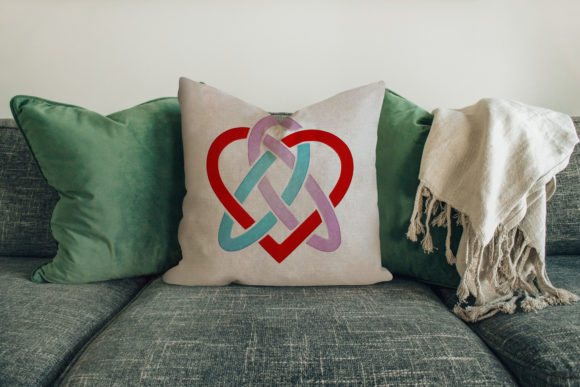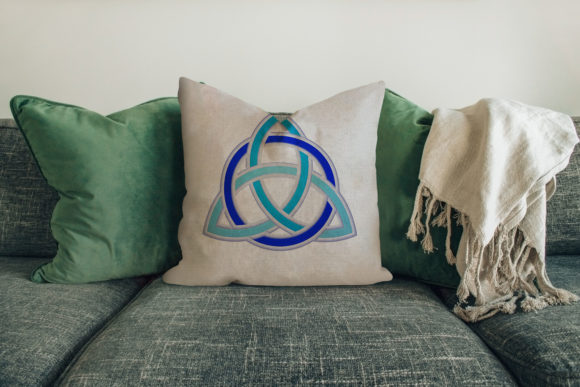
Celtic Knot, Celtic Symbol Embroidery Design
First Impression: Timeless, Handcrafted, and Professionally Versatile
As an embroidery designer who’s developed hundreds of commercial designs for small businesses—from artisanal bakeries to indie florists—I immediately recognize Celtic Knot, Celtic Symbol as a strong candidate for branded merchandise. The title alone signals heritage, continuity, and craftsmanship—qualities that resonate deeply with handmade product buyers and local business audiences. It doesn’t read as trendy or fleeting; instead, it feels quietly confident: elegant yet approachable, classic without stiffness, and decorative without sacrificing clarity. That balance is rare—and essential—for small business merch that must work equally well on a café apron and a boutique tote bag.
Real-World Business Performance Across Merch Categories
Celtic Knot, Celtic Symbol excels where subtlety and symbolism matter. For embroidered patches—especially those used on staff uniforms, jackets, or product packaging—it delivers instant visual cohesion. Its interwoven lines communicate care, tradition, and attention to detail—traits customers associate with trusted local brands. On aprons and work shirts, it reads cleanly at chest or sleeve placement, adding identity without overwhelming function. As a cap embroidery motif, it holds up well on curved fronts when sized appropriately (more on sizing below). On tote bags and reusable market sacks, it anchors the design with quiet authority—no loud fonts or logos needed.
For Etsy sellers and craft-based businesses, this machine embroidery design supports a cohesive brand story: think handmade ceramics with matching linen tea towels, or pet brand bandanas paired with embroidered collar tags. Because it’s offered in six sizes, you can scale Celtic Knot, Celtic Symbol from a 1.25” patch on a keychain to a 4.5” statement on a sweatshirt back—ideal for tiered product lines. As a House category embroidery file, it also integrates naturally into home-focused branding: think kitchen linens, pillow accents, or shop signage stitched onto fabric banners.
Where to Use With Intention—Not Assumption
While versatile, Celtic Knot, Celtic Symbol isn’t universally “plug-and-play.” Its flowing, connected lines demand thoughtful execution. At very small patch sizes (under 1.5”), fine inner loops may collapse or lose definition—especially on textured fabrics like twill or canvas. Cap fronts and curved surfaces require careful digitizing adjustments to prevent distortion; always test stitch on a mock cap before full production. Dark uniforms (navy, charcoal, black) need high-contrast thread colors—navy + gold or charcoal + cream—not just default black-on-black.
Avoid pairing it with dense text or tight logos in the same hoop. Its moderate stitch density means it won’t overpower lightweight fabrics, but overloading it with extra elements risks visual clutter. And while it’s ideal for frequent-wear items like aprons and tote bags, confirm the digital embroidery file includes optimized underlay and pull compensation—key for durability through repeated washing and laundering.
Brand Identity Impact: More Than Just a Pattern
This isn’t just decoration—it’s brand shorthand. When customers see Celtic Knot, Celtic Symbol stitched on a bakery’s flour-dusted apron or a florist’s reusable bouquet wrap, they subconsciously register consistency, intention, and care. That builds trust faster than a slogan ever could. Unlike generic icons or stock graphics, this symbol carries narrative weight: unity, eternity, interconnectedness—values many small businesses embody authentically.
Used consistently across touchpoints (caps, totes, packaging tags), it strengthens visual recognition without demanding logo repetition. It also elevates perceived product value: a plain cotton tote becomes a keepsake; a basic sweatshirt gains artisanal credibility. For handmade product sellers, it reinforces authenticity—no clipart energy here. And because it avoids overt religious or national specificity, it welcomes broad interpretation while retaining cultural resonance.
Practical Designer Notes for Commercial Use
Before launching Celtic Knot, Celtic Symbol into production, follow these field-tested steps:
- Test in black and white first—verify line integrity and spacing without color distraction.
- Check minimum viable size: stitch the smallest version (likely 1.25” or 1.5”) on your target fabric to assess loop clarity and thread coverage.
- Review thread color contrast against your base material—especially on dark or heathered fabrics.
- Inspect spacing between knot segments; tight junctions may require manual editing if stitching skips or nests.
- Confirm hoop size compatibility with your embroidery machine and intended application (e.g., cap frames vs. flat hoops).
- Test on real fabric + stabilizer combo—a lightweight tear-away may not support dense knot areas on knits or fleece.
- Create a printable mockup for client approval, showing scale, placement, and thread palette options.
- Compare beside existing design assets—does it harmonize with your current logo, typography, and brand palette?
- Verify commercial licensing before using on resale items—this is critical for Etsy sellers, apparel decorators, and small batch producers.
Remember: a high quality embroidery design like Celtic Knot, Celtic Symbol only delivers full business value when treated as a strategic asset—not just a digital embroidery file. Its strength lies in adaptability, but that demands intentional choices around size, fabric, thread, and context. When executed well, it becomes part of your brand’s quiet language: recognizable, meaningful, and unmistakably yours.