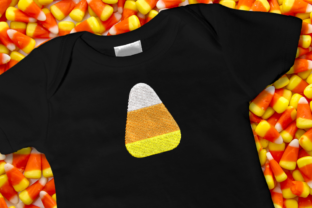
Mini Candy Corn: A Smart Halloween Embroidery Choice for Small Business Brands
First Impression: Playful, Precise, and Professionally Sized
As an embroidery designer who’s digitized and stitched hundreds of small-business merchandise pieces—from café aprons to boutique tote bags—I opened Mini Candy Corn expecting charm with function. What stood out immediately was its clear intent: a compact, fully filled candy corn motif built for real-world production—not just digital display. The name says it all: “mini” signals smart scale, “candy corn” delivers instant seasonal recognition, and the description confirms it’s engineered for the 4×4 hoop—a non-negotiable for patch makers, cap embroiderers, and small-run apparel shops. It doesn’t try to be elegant or minimalist; it leans into friendly, approachable playfulness—ideal for bakeries, pet boutiques, florists, and handmade studios that want Halloween spirit without looking costumed or cluttered.
Where Mini Candy Corn Shines in Business Use
This machine embroidery design excels where small-scale branding matters most. As an embroidered patch, Mini Candy Corn holds crisp definition at 1.5–2 inches tall—perfect for sew-on labels on product packaging, iron-on accents on reusable shopping bags, or woven-style patches on staff aprons. On caps? It works beautifully on the front panel when sized to 1.75”, especially with clean thread color contrast (think orange thread on navy twill). For custom apparel, I’ve used it as a subtle sleeve detail on work shirts for a local florist—small enough to feel intentional, large enough to read from across a counter. Tote bag design benefits too: placed near the bottom hem or centered on a pocket, it adds seasonal warmth without overwhelming the canvas. And because it’s delivered in 9 formats and 3 sizes, scaling for Etsy branding (e.g., tiny chest logo on organic cotton tees) or boutique merchandise (e.g., embroidered gift tags) is seamless.
Real-World Fit for Your Brand Identity
Mini Candy Corn strengthens brand identity not by shouting—but by stitching consistency. When your bakery uses it on staff aprons *and* on branded cotton candy bags, customers subconsciously connect the visual rhythm. That repetition builds trust: it signals intentionality, attention to detail, and care in presentation. For handmade product sellers, this design reads as authentically crafted—not stock clipart. Its balanced fill density avoids that “flat” look common in over-digitized Halloween motifs, giving depth without excessive stitch count. That translates directly to perceived product value: a well-executed Mini Candy Corn on a linen tea towel feels premium; the same design poorly stitched on low-grade stabilizer reads as rushed. Visual consistency across merch—caps, totes, patches—also supports buyer engagement: repeat customers notice and remember the thoughtful details.
Use With Care: Practical Limits You Should Know
Like any digital embroidery file, Mini Candy Corn has sweet spots—and boundaries. Avoid using the smallest size on curved surfaces like cap fronts unless you’ve tested it first: tight curves can distort fine fill transitions. On dark uniforms or textured fabric (like heavy canvas or terry cloth), confirm thread color contrast—orange alone may fade visually; consider adding a white underlay or switching to a high-contrast combo like black outline + vibrant orange fill. Also, while the design is “mini,” don’t assume it’s automatically low-stitch-density—it’s fully filled, so check spacing between elements before shrinking further. If your small business merch includes items meant for frequent washing (e.g., restaurant aprons), always test wash a sample: dense fills hold up best with proper stabilizer and quality thread.
Essential Embroidery Designer Notes for Commercial Use
Before sending Mini Candy Corn to production—or sharing it with clients—follow these practical steps:
- Test in black and white first. Print a monochrome version to assess shape clarity and negative space balance—critical for small patch sizes.
- Verify minimum viable size. Stitch the smallest included size on your target fabric + stabilizer combo. Does the candy corn’s tri-color segmentation stay legible? Does the tip remain sharp?
- Review thread color contrast deliberately. Don’t rely on screen previews—hold actual thread against your fabric swatch under natural light.
- Confirm hoop size compatibility. Though described as 4×4 compatible, double-check your machine’s actual usable area—some hoops lose 1/8” edge clearance.
- Test on real fabric—not just tear-away. Try it on your go-to apron linen, cap twill, or tote canvas to evaluate stitch tension and pull.
- Create a printable mockup for client approval. Show how Mini Candy Corn looks scaled on their exact garment style—this prevents costly rework.
- Compare beside other design assets. Does it align with your current logo weight, line thickness, and spacing? Consistency in your design assets builds long-term recognition.
- Confirm commercial licensing. Since this is intended for small business merch, ensure your purchase grants rights for resale, promotional use, and branded patch production.
Bottom line: Mini Candy Corn isn’t just a seasonal decoration—it’s a versatile, production-ready embroidery file that earns its place in your commercial embroidery toolkit. Whether you’re launching Halloween-themed customer gifts, updating staff uniforms, or building cohesive boutique merchandise, it delivers recognizable charm with professional execution. Just remember: even the sweetest design needs smart testing, thoughtful scaling, and intentional placement to truly serve your brand—and your customers.