Pride Wings: A Craft Fair Designer’s Honest Review
First Impression: Bold, Elegant, and Instantly Recognizable
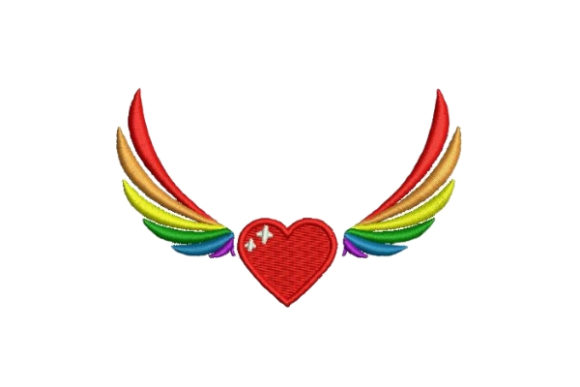
As an embroidery designer who’s prepped over 200 craft fair booths—and shipped thousands of handmade products—I opened Pride Wings expecting charm. What I got was stronger: a confident, elegant heart motif wrapped in wing-like curves and rich color flow. It doesn’t read “cute” or “minimal”—it reads intentional. The phrase “Spread your wings and show your true colors” lands perfectly with its visual rhythm: soft curves, balanced symmetry, and a heart that anchors without overpowering. This isn’t farmhouse whimsy or rustic charm—it’s modern awareness with quiet luxury. For craft fairs, that means immediate booth appeal—especially beside neutral-toned goods.
Where Pride Wings Shines on Real Craft Fair Products
Tote bags: A standout. Positioned mid-panel on a natural canvas tote, Pride Wings reads clearly from 6 feet away. Its vertical flow complements the bag’s shape, and the colorful thread pops against light or mid-tone fabrics. Avoid dark denim unless you use high-contrast thread—more on that below.
Aprons and tea towel embroidery: Excellent scale flexibility. At 3.5–4 inches tall, it fits beautifully above the pocket on a chef-style apron. On a linen tea towel, centered near the hem, it adds warmth without clutter. The design’s open negative space prevents muddiness on textured weaves—critical for kitchen textiles.
Embroidered patches and fabric pouches: Highly effective as a sew-on patch (3"–3.75" works best). The wings’ outer edges give clean seam allowance, and the heart holds detail even at smaller sizes. On drawstring pouches, it reads as both decorative and meaningful—ideal for gift-ready small shop products.
Caps and curved surfaces: Use caution. The wing contours require precise digitizing to avoid distortion on structured caps. If your machine embroidery design wasn’t optimized for curved stabilization, test on a scrap cap first. Flat-bill trucker caps handle it better than low-profile fitted styles.
Pillow covers and market bags: A premium pairing. On oatmeal linen or organic cotton duck, Pride Wings elevates perceived value instantly. Customers linger longer when a design feels both personal and polished—this delivers.
What Makes Pride Wings Sell—And What Slows It Down
This embroidery file earns attention because it’s emotionally resonant *and* visually legible. At a crowded craft fair, people don’t stop for vague symbolism—they stop for clarity, color, and craftsmanship. Pride Wings delivers all three.
It photographs exceptionally well for Etsy seller listings: the heart stays crisp, gradients in thread translate cleanly, and background fabric texture doesn’t compete. That means less editing time and higher conversion on digital storefronts.
For batch production? Yes—it’s repeatable. The stitch density feels moderate (no excessive fill areas), and thread color transitions are smooth—not jarring or overly segmented. But here’s the catch: check your actual file. If tiny wingtip details or fine inner linework exist, they’ll vanish on dense fabrics like terry cloth or heavy twill. Always verify spacing between elements—crowded stitches trap stabilizer and cause puckering on lightweight cotton.
Careful-Use Notes Every Embroiderer Must Know
- Dense stitch areas: If the heart center or wing bases are heavily filled, reduce density by 10–15% on towels or napkins to prevent stiffness.
- Tiny details & lettering: The description mentions “lovely heart embroidery”—but no text is referenced. If your version includes subtle script (e.g., “Pride” or “Wings”), confirm legibility at 2.5". Small lettering blurs fast on textured fabric.
- Dark fabric: Test contrast aggressively. Light pastel threads disappear on navy or charcoal unless you add underlay or switch to metallic or neon accents.
- Curved surfaces: Caps, mugs (if heat-transfer embroidered), and curved pouch seams demand re-hooping or specialty hoops. Don’t assume standard hoop size fits.
- Small sizes: Below 2.75", wing definition softens. Reserve sub-3" uses for patches only—not standalone appliqués.
Design Impact Beyond the Stitch
Pride Wings strengthens brand consistency for Awareness-focused makers: it signals values without shouting. On a boutique shelf beside botanical prints or minimalist ceramics, it adds joyful contrast while staying cohesive. In your booth display, pair it with solid-color backdrops—not busy patterns—to let the color story breathe.
Buyer engagement rises when meaning meets execution. Customers ask about this design. They point. They tag friends. That’s not just visibility—it’s connection. And connection drives repeat sales, especially for handmade product lines built on trust.
Practical Designer Notes Before You Cut Fabric
- Test the digital embroidery file on scrap fabric matching your final product’s weight and weave.
- Check thread contrast on *both* light and dark fabric swatches—not just white.
- Review spacing between wing elements: tight gaps risk stitching errors on low-tension machines.
- Confirm hoop size compatibility—don’t assume it fits your standard 4×4 unless verified.
- Inspect stitch density in the heart base and wingtips; adjust if needed for your fabric texture.
- Use cutaway stabilizer for knits or stretchy fabrics; tear-away works well for stable cottons and linens.
- Create at least one real mockup—not just a printable mockup. Lighting, drape, and hand-feel change everything.
- Compare how Pride Wings looks across three fabric colors (e.g., cream, sage, terracotta) before committing to a full run.
- Verify commercial licensing status—this is essential for any commercial embroidery use, especially on resellable finished product.
Final Thought: A High-Return Awareness Design
Pride Wings isn’t just another machine embroidery design. It’s a conversation starter, a quality signal, and a versatile craft fair product that scales from $12 patches to $85 pillow covers. When executed with care—right stabilizer, smart thread choices, thoughtful placement—it performs like a signature piece. For Etsy sellers, small shop owners, and boutique makers building intentional collections, it’s worth the extra 20 minutes of testing. Because in handmade markets, what sells isn’t just pretty—it’s purposeful, polished, and proudly stitched.