Somebunny Loves You: A Merch Designer’s Real-World Review
As an embroidery designer who’s digitized and stitched thousands of designs for small businesses—from neighborhood bakeries to indie florists and pet boutiques—I approach every new machine embroidery design with two questions: Does it serve the brand? and Will it hold up in production? That’s why I put Somebunny Loves You through a full pre-production review—not as a holiday decoration, but as functional, scalable small business merch. Here’s what stands out—and what needs attention—before you commit to patches, caps, aprons, or tote bag designs.
A First Impression That Feels Warm, Not Cutesy
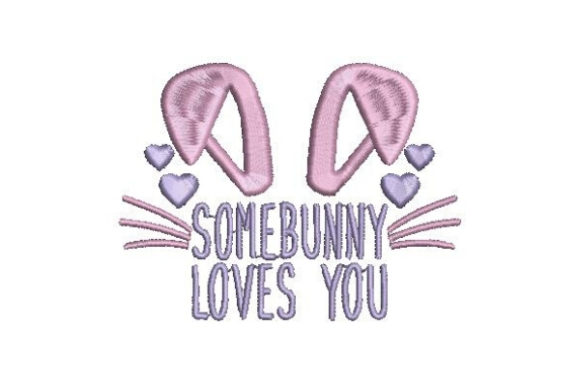
The title Somebunny Loves You lands instantly: playful, affectionate, and seasonally grounded in Easter—but not overly literal. It avoids cartoon overload or dated clip-art energy. Based on the description (“cute embroidery design for kids, for your hubby, wifey, or friend… beautiful satin stitch details”), this isn’t a minimalist line art file—it leans into texture, dimension, and charm. That’s a win for brands that want to signal approachability without sacrificing polish. Think: a handmade soap shop adding it to linen aprons, or a local café stitching it onto barista caps—not as a gag, but as a quiet signature of care.
Where It Shines in Real Business Use
Somebunny Loves You works hardest where personality meets practicality:
- Embroidered patches: Its balanced proportions and clear focal point (the bunny + text) scale well from 2”–3.5”. When backed with twill or chenille, it reads as premium—not craft-fair temporary.
- Apron embroidery: Centered above the pocket or subtly on the hem, it adds warmth to staff uniforms without overwhelming the garment’s utility.
- Cap embroidery: On structured front panels (especially low-profile cotton twills), the satin stitch detail holds definition—if digitized cleanly. Avoid curved crowns unless you’ve tested hoop tension and fabric pull.
- Tote bag design: Stitched near the handle seam or centered on the front panel, it transforms generic canvas into branded, giftable merchandise—ideal for spring markets or boutique checkout counters.
- Product packaging accents: Small stitched tags on gift boxes, fabric-wrapped jars, or reusable produce bags reinforce handmade authenticity—Somebunny Loves You signals joy, not just occasion.
For Etsy sellers and craft businesses, this design bridges seasonal relevance with evergreen emotional resonance. It doesn’t scream “Easter sale”—it whispers “we made this with you in mind.” That builds trust faster than a discount tag.
Where Caution Is Required
Not every surface welcomes Somebunny Loves You equally. Here’s where to pause before sending to the hoop:
- Small patch sizes under 1.75”: Satin stitch details—especially tiny ears or lettering curves—can blur or skip. Always test at your target size on actual fabric.
- Dark uniforms or textured fabrics: High stitch density (implied by “beautiful satin stitch details”) may require heavier stabilizer or adjusted underlay to prevent puckering on fleece, terry cloth, or thick denim.
- Curved surfaces like cap bills or sleeve cuffs: The design’s width-to-height ratio matters. If it’s too wide, stretching across a curve risks distortion—review the original embroidery file’s dimensions before digitizing adjustments.
- Frequent-wash items: Satin stitch is durable—but only if thread tension and stabilizer match the end-use. A bakery apron sees steam, grease, and daily laundering. Confirm thread colorfastness and test wash one sample.
Brand Identity Impact: More Than Just Cute
When small businesses choose Somebunny Loves You, they’re not just picking an Easter motif—they’re choosing a tone. It reinforces handmade product credibility while feeling inclusive (not kid-only). That duality helps unify customer gifts, staff wear, and retail merch under one visual language. Used consistently—say, on embroidered tote bags handed to first-time buyers *and* on the owner’s apron—it builds recognition without shouting. And unlike generic fonts or stock icons, it carries subtle storytelling: softness, sincerity, care. That lifts perceived product value—especially in crowded spaces like farmers’ markets or online craft galleries.
Practical Embroidery Designer Notes Before Production
If you’re sourcing this as a digital embroidery file for commercial embroidery, treat it like any client asset—not just a download:
- Test it in black and white first: Does contrast hold? Are outlines legible without color crutch?
- Check minimum viable size: Can it shrink to 2” without losing clarity in the bunny’s face or script flow?
- Review thread color contrast: Light pastels pop on darks—but will pale yellow vanish on beige linen? Match swatches to your fabric.
- Inspect spacing: Tight lettering or overlapping elements may need manual cleanup for clean stitch-out.
- Confirm hoop size compatibility: Does it fit standard 4x4 or require 5x7? That affects machine throughput and pricing.
- Test on real fabric: No substitute for stitching on your actual cap twill or apron canvas—with your stabilizer stack.
- Create a printable mockup: Show clients how Somebunny Loves You looks on their tote bag or uniform before cutting thread.
- Compare beside other design assets: Does it visually align with your logo, typography, and brand palette—or clash with existing embroidery files?
- Verify commercial licensing: Since this is intended for small business merch, confirm the embroidery file permits resale use—not just personal projects.
Remember: a great machine embroidery design isn’t just about how it looks on screen. It’s about how it stitches, wears, sells, and represents your brand long after Easter ends. Somebunny Loves You has the heart for that—if you give it the right context, testing, and intention.